Comparing Flavours and Personal Taste
Read/Listen first
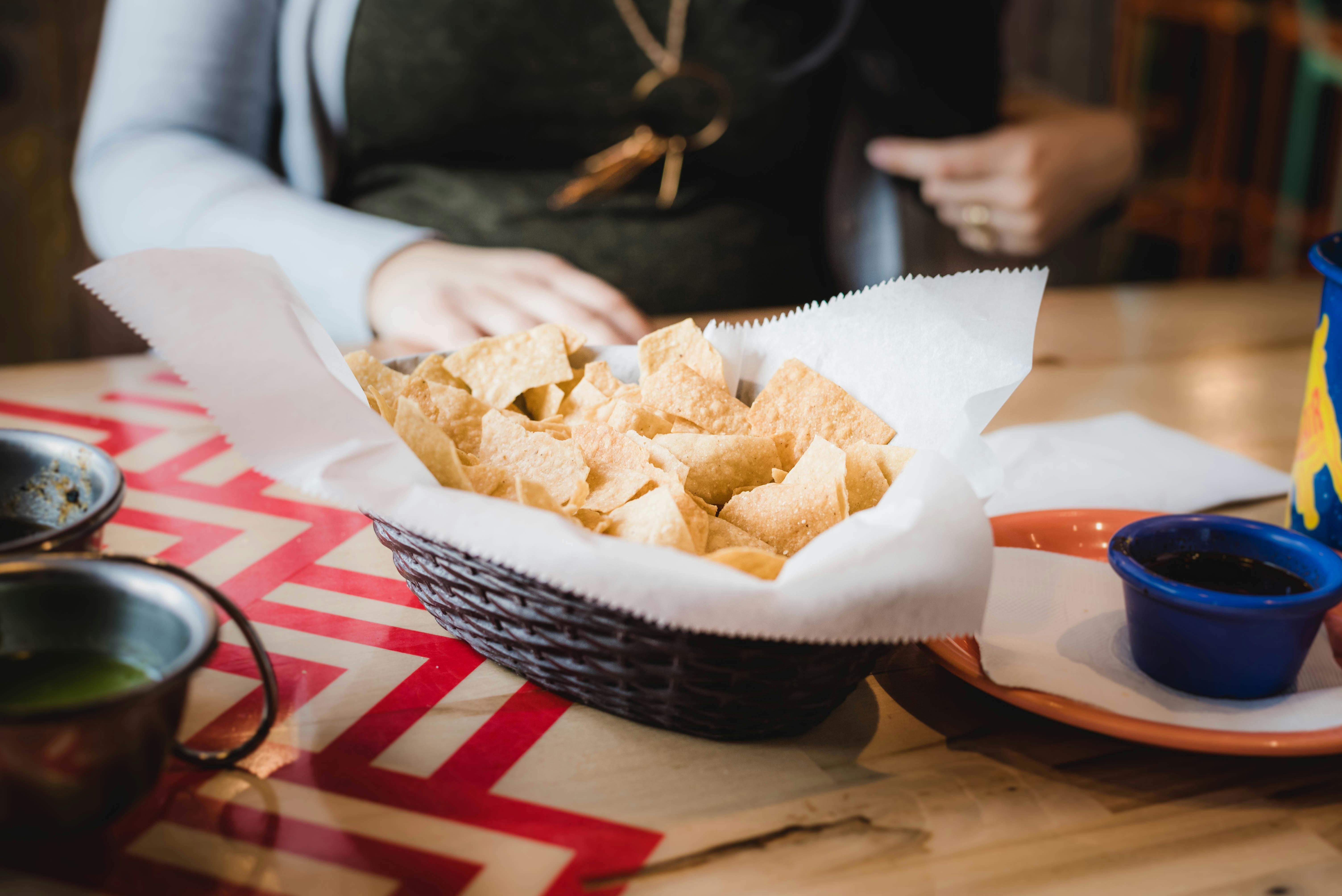
Yesterday, I was listening to a short podcast about crisps while I was commuting, and it reminded me of a chat I had at the office. A colleague had brought a big packet of chips for the team, and we started comparing flavours. I’ve always thought salt and vinegar can’t be beaten, although I used to buy cheese ones when I was a student. While we were talking, someone opened a jar of guacamole and suggested we should try dipping the crisps, just to see if it worked. After I tasted it, I realised my go-to snack has changed, and I’ve already recommended the combo to two friends. If we had more time, we would test a few brands side by side, but we need to keep the meeting short. Before we went back to work, we agreed that personal preference matters, yet portion size is also part and parcel of staying healthy.⚡ Learning goals
- Can explain why a snack is appealing and describe the crunch and flavour.
- Can compare snack choices and justify a personal preference politely.
- Can suggest trying an alternative and agree next steps in a short chat.
✨ Key language
- You can’t beat the crunch “You can’t beat the crunch in fresh crisps.”
- It becomes a snowball effect “One crisp became a snowball effect.”
- It’s my go-to snack “Guacamole is my go-to dip now.”
⚙️ Rules & Grammar — 4 Structures
1️⃣ Past continuous + Past simple (when/while)
Rule: Use the past continuous for the background action and the past simple for the interrupting action. Use while before the longer action, and when before the short action.Examples: While I was commuting, I was listening to a podcast.; We were talking when someone opened the jar.; While we were comparing flavours, I tried the dip.
Common pitfall + fix: Using while before the short action — Say “We were talking when someone opened the jar.”.
Choose the best option: ___ we were talking, someone opened the jar of guacamole.
Tip: Use while for the longer background action.
Fill with the best answer:
We were comparing flavours ___ I tasted the dip.Tip: Use when for the short action.
2️⃣ Present perfect (recent actions / experience)
Rule: Use the present perfect to connect past actions to the present (recent news, results, or experience).Examples: I’ve already recommended the combo to two friends.; My go-to snack has changed.; I’ve tried salt and vinegar many times.
Common pitfall + fix: Using past simple without a finished time marker — Say “I’ve already recommended it” (no finished time given)..
Pick the best sentence for a recent result (no exact time):
Tip: Present perfect works for recent results without a finished time.
Fill with the best answer:
I’ve already _______ the combo to two friends.Tip: Past participle after have/has.
3️⃣ Conditionals with would/could
Rule: Use If + past, would/could + base verb to imagine a different situation now or in the near future.Examples: If we had more time, we would test a few brands.; We could compare flavours side by side.; If it worked, we would switch our go-to snack.
Common pitfall + fix: Mixing tenses: “If we have more time, we would…” — Say “If we had more time, we would test…”..
Complete the conditional: If we had more time, we ____ test a few brands.
Tip: Use would in the result clause.
Fill with the best answer:
If we ______ more time, we would test a few brands.Tip: Use past form after if.
4️⃣ Contrast & time clauses (although/before/after)
Rule: Use although to contrast ideas; use before/after to order actions in time.Examples: Although I used to buy cheese ones, I prefer salt and vinegar now.; After I tasted it, I changed my mind.; Before we went back to work, we agreed on portion size.
Common pitfall + fix: Using a comma instead of a linker — Add a linker: “Although I used to…, I now…”..
Choose the best linker: ___ I used to buy cheese ones, I now prefer salt and vinegar.
Tip: Use although to show contrast.
Fill with the best answer:
_______ we went back to work, we agreed to keep the meeting short.Tip: Use before to show sequence.
✍️ Vocabulary
crunch
Meaning: a loud, sharp sound made when something hard is bittenSynonyms: crispiness, crackle
Chunk/Idiom: can’t beat the crunch
Example: You can’t beat the crunch of fresh crisps.
Morphology: noun; verb (to crunch); adjective (crunchy); adverb (crunchily)
Self-practice: Describe a snack you like using “crunch” in one sentence.
snowball effect
Meaning: a situation where one action leads to more and more similar actionsSynonyms: chain reaction, knock-on effect
Chunk/Idiom: turn into a snowball effect
Example: One crisp turned into a snowball effect.
Morphology: noun phrase; verb (snowball); adjective (snowballing); adverb (—)
Self-practice: Write a short example of a snowball effect at work.
personal preference
Meaning: someone’s individual liking or disliking based on their own opinionSynonyms: individual taste, subjective choice
Chunk/Idiom: It’s a matter of personal preference
Example: Flavour choices are a matter of personal preference.
Morphology: noun phrase; adjective (personal; preferable); adverb (personally; preferably)
Self-practice: Finish: “My personal preference is… because…”.
part and parcel
Meaning: an essential or integral feature of somethingSynonyms: essential element, integral part
Chunk/Idiom: part and parcel of everyday life
Example: Portion size is part and parcel of staying healthy.
Morphology: idiom (noun phrase); adjective (integral); adverb (essentially)
Self-practice: Use “part and parcel” to describe a habit in your routine.
go-to
Meaning: relied upon as the best choice for a particular purposeSynonyms: default, trusted
Chunk/Idiom: my go-to snack
Example: Guacamole has become my go-to dip.
Morphology: adjective (go-to); noun (go-to option); verb (rely); adverb (reliably)
Self-practice: Name your go-to tool at work and explain why.
guacamole
Meaning: a paste made from mashed avocado, often with lime and saltSynonyms: avocado dip, avocado spread
Chunk/Idiom: dip it in guacamole
Example: We dipped the crisps in guacamole and compared flavours.
Morphology: noun; adjective (avocado-based); verb (mash); adverb (smoothly)
Self-practice: Write one sentence inviting someone to try guacamole.
☁️ Examples (+ audio)
You can’t beat the crunch, so I kept eating without thinking.
While we were comparing flavours, I tried guacamole and smiled.
I’ve already recommended it, although it’s still a personal preference.
If we had more time, we would test brands before the next meeting.
✏️ Exercises
Grammar
Which sentence matches the mini text?
Tip: Background action = past continuous; short action = past simple.
Choose the best option (recent result, no exact time):
Tip: Use present perfect for a change with a present impact.
Fill with the best answer:
Although I _______ to buy cheese ones, I prefer salt and vinegar now.Tip: Use “used to” for a past habit.
Fill with the best answer:
If we had more time, we would _______ a few brands side by side.Tip: Use base verb after “would”.
Vocabulary & Comprehension
What does “snowball effect” mean here?
Tip: One action leads to more similar actions.
Choose the best meaning of “part and parcel”:
Tip: It means something is integral to the situation.
Fill with the best answer:
Guacamole is a paste made from mashed _______.Tip: It’s a common dip for tortilla chips.
Fill with the best answer:
Salt and vinegar is my _______ flavour of crisps.Tip: This word expresses personal preference.
✅ Guided practice
Mini-dialogue:
A: What’s your favourite crisp flavour these days?B: Mine used to be cheese, but I’ve switched to salt and vinegar.
A: If we had more time, we would test two brands side by side.
Why this matters:
It helps you explain choices without sounding dogmatic. It also makes suggestions polite and practical. That’s useful in quick work chats.Verb & Adjective Pack:
compare flavours — We compared flavours before we went back.dip into — We dipped crisps into guacamole.
rely on — It’s the go-to option I rely on.
Try & compare:
Fill with the best answer:
If we had more time, we would _______ a few brands side by side.Tip: Use the base verb after “would”.
Fill with the best answer:
Self-correction: Fix the sentence: While we tasted it, someone opened the jar.Tip: Use when for the short action.
Practice aloud: Listen, repeat, then type the sentence.
Although it’s personal preference, you can’t beat the crunch.
Tip: Listen for the linker “although” and the idiom “can’t beat”.